

May 1972
The Leverage opens with a prologue dramatizing the discovery and immediate aftermath of the death of J. Edgar Hoover on the morning of May 2, 1972 at the age of seventy-seven. He had run the Federal Bureau of Investigation and its predecessor agency for forty-eight years.
For decades Hoover had been collecting information on prominent Americans: senators, congressmen, presidents, judges, executives, journalists, activists, artists, celebrities, if you were important, Hoover probably had a file on you. After his death the disposition of these files became the immediate focus of anyone who might possibly be in them. One person who was certainly in them was the sitting President, Richard Nixon.
After Hoover’s death, Clyde Tolson, Hoover’s associate director, closest friend, and companion of four decades, became acting director. His health was poor. He would hold the job for less than a day.
Nixon moved fast. The day after Hoover died Nixon appointed an ally, L. Patrick Gray III as acting director of the FBI. Gray was a former submarine commander and Justice Department lawyer whose nomination to become deputy attorney general was still awaiting Senate confirmation. Nixon withdrew the nomination and redirected him to the FBI. Gray had never worked for the Bureau.
When Gray arrived at FBI headquarters, Helen Gandy, Hoover’s secretary of more than half a century, was already at work. She controlled Hoover’s correspondence, his calendar, and most importantly to Nixon, access to the records Hoover kept outside the Bureau’s ordinary filing system.
Gandy showed the new director around. There were open filing cabinets. Papers were being sorted into boxes. Gandy told Gray these papers were Hoover’s personal effects. Gray looked through the suite and took the obvious precaution. He ordered Hoover’s private inner office secured. He reported back to Nixon that Hoover’s files were secure.
They were not.
The files were never in Hoover’s office. The files were in Helen Gandy’s office. Gray secured the wrong room.
John P. Mohr knew this. Mohr ran the FBI’s administrative machinery and belonged to Hoover’s small inner circle. He had been one of the men who played cards with the Director and Tolson. He also knew how Hoover’s private filing system worked.
Later that week Gandy produced twelve boxes for Mark Felt (who later achieved his own notoriety), then one of the Bureau’s most senior career officials. They contained Hoover’s Official and Confidential files: roughly 165 folders and almost 18,000 pages. Felt took custody of these boxes.
L. Patrick Gray told reporters that afternoon that there were no secret dossiers at the FBI.
There was however, a second set of files and Gandy continued sorting those. She worked in the Director’s HQ office suite until May 12. Then dozens of file drawers of material were moved out of FBI headquarters and taken to Hoover’s house at 4936 Thirtieth Place in northwest Washington where she continued.
The destruction of this second set of files would take weeks. FBI drivers carried selected material away to be shredded and burned. Mohr and Gandy supervised the process.
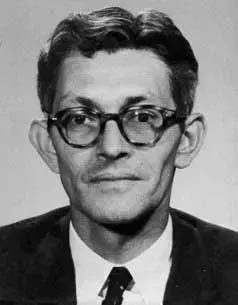
Sometime during those weeks, according to Hoover biographer Curt Gentry, one of Hoover’s neighbors noticed a station wagon in the alley behind the house. A neighbor whom Gentry described as someone who ‘knew his way around Langley.’ The man loading boxes into the vehicle caught his attention: tall, extremely thin, middle-aged, heavy horn-rimmed glasses, dark suit.
He thought he recognized him.
The man looked like James Jesus Angleton, chief of counterintelligence at the Central Intelligence Agency
.
When Mohr was asked later about this, he supplied an explanation; the boxes were cases of spoiled wine.
What the Files Were
The first set of files were the Official and Confidential files that Helen Gandy gave to Mark Felt. They were maintained separately in the Director’s office suite rather than as an ordinary part of the FBI’s central records system. Those files survived. We know what was in them. If you want to read them, they are largely available in the FBI Vault (with redactions of course).
There was material on presidents, members of Congress, journalists, and other prominent Americans. There were investigative reports, internal memos, and correspondence. There was derogatory information. There were products of surveillance. There were records of activities the FBI would later have a considerable difficulty explaining.
But the Official and Confidential files were not Hoover’s most closely guarded collection. The second set of files were the Personal and Confidential files. The disposition of those files is much less clear. Gandy said Hoover had instructed her to destroy his personal papers after his death. She reviewed the material herself, first at FBI headquarters and then at Hoover’s house, and ultimately had it shredded and burned.
When Congress came looking three years later, Gandy testified that she had destroyed nothing involving official Bureau business. But we only have her word on that. There was no inventory of the P&C files to check against.
Only months before Hoover died, he had ordered eight folders involving official business transferred out of Personal and Confidential and into Official and Confidential. One concerned the Bureau’s procedures for concealing unauthorized break-ins. Another concerned an FBI matter involving Supreme Court Justice Abe Fortas. Hoover himself had explained the logic. Material placed in Personal and Confidential could be kept away from ordinary Bureau clerks and supervisors.
So by Hoover’s own practice, Personal and Confidential did not necessarily mean personal. It meant more restricted. The collection we do possess cannot tell us what material was in the missing collection that we do not. But those eight folders can tell us about the threshold between the two.
We know that at least eight O&C files had once been held one level closer as P&C files. Neither we, nor congress could not reconstruct what Gandy destroyed. There is no surviving catalogue of Hoover’s Personal and Confidential files. No responsible account can claim that a particular missing document was there.
But those eight documents provide us with the edge case. The eight files establish what Hoover considered sufficiently sensitive to remove from the Bureau’s ordinary records system. That does not provide us with the outer edge of what Hoover kept in P&C files. But it does show us where Hoover thought the minimum edge was.
How the Files Were Used
William Sullivan spent thirty years in the FBI and rose to become one of Hoover’s senior officials before a spectacular falling-out in 1971. After leaving the Bureau, Sullivan described how the leverage system worked.
If the Bureau acquired embarrassing information about a target, Sullivan said, Hoover did not necessarily threaten him. He sent somebody to see him. The visitor would explain that the Bureau had encountered something during the course of an investigation. Something concerning the target, or perhaps a member of his family. The Director thought he should know. Of course, the matter would be treated with complete discretion. That was all.
The targetnow knew that Hoover knew. He also knew that Hoover had chosen, for the moment, to protect him. The transaction could therefore be presented as a favor. A favor is more durable than a threat. Blackmail requires an explicit exchange: do this or I expose you. It creates a victim who knows he has been threatened and a blackmailer who has committed an identifiable act. A favor is harder to pin down. There are no requests or promises. It is just new information in the existing relationship. One person knows something about the other. The other person knows he knows it. And both understand that confidentiality is a choice that can be reconsidered based on circumstances.
The Bureau documented versions of this pattern repeatedly. Information collected for one purpose migrated into another. Derogatory material reached presidents. Politicians learned that the FBI possessed allegations concerning them. Journalists received information about people Hoover wanted damaged. Presidents, in turn, asked Hoover for information about their enemies.
In 1937 Richard Nixon was in his last semester at Duke Law School, applied to be a special agent of the FBI. He interviewed in July. He passed the physical. Then he was ghosted. He never heard back. That application lived in Hoover’s private office file. Hoover wasn’t keeping a thirty-four-year-old job application. He was keeping a file on Richard Nixon. It was the opening document in that file just happened to be a job application.
Sometimes the system became less subtle.
Martin Luther King Jr. was wiretapped and bugged. Recordings from that surveillance were assembled. The package, the tape and letter, was mailed to King himself at the SCLC office in November 1964. Coretta Scott King opened it two months later, in January 1965. The accompanying letter was designed to appear as if it came from a disillusioned Black supporter and was understood by congressional investigators as an attempt to drive King to suicide.
That was an extreme case.
The Man at the Back Door
James Jesus Angleton had run CIA counterintelligence since 1954.
There is an entire literature devoted to making Angleton picturesque: orchids, poetry, fly-fishing, cigarettes, the wilderness of mirrors. One of the best versions of the mythologized Angleton is presented in Robert Littell’s The Company if you want to get a sense of color (be forewarned, it’s a LONG book).
So let’s ask ourselves, why was the head of counterintelligence for the CIA possibly spotted carrying boxes coming out of J. Edgar Hoover’s house shortly after Hooover’s death? There are a lot of potential answers to that. But to understand the root causes first we need to go back to the formation of the CIA in 1947. Hoover vehemently opposed the creation of the Central Intelligence Agency. Hoover wanted that role to be filled by expanding the FBI’s wartime Special Intelligence Service. Hoover eventually failed at stopping Truman from creating the CIA, but he did succeed in limiting the scope of CIA’s domestic reach. These limitations in particular impacted counterintelligence, Angleton’s domain.
Even from the beginning in 1954 Angleton had exposure because he had trusted Kim Philby.
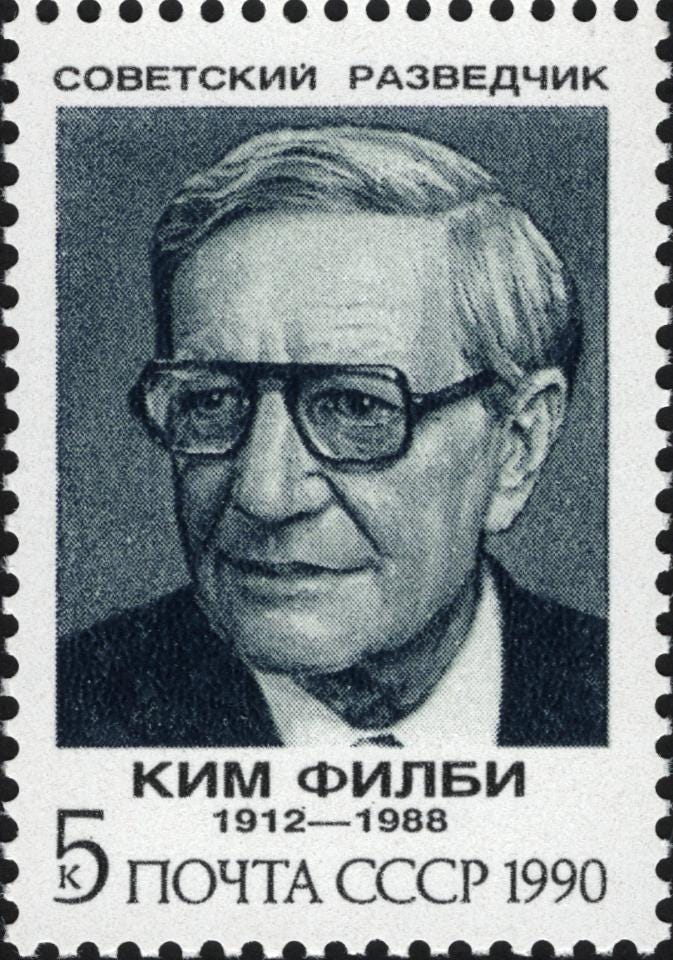
During WW2 Philby was Angleton’s mentor in London and taught him the ropes of counter-espionage. In the years after the war, the two men worked closely together in Washington. Philby was Britain’s senior intelligence representative in the United States. He was also a Soviet agent. When Philby was recalled to the UK in 1951 under suspicious circumstances involving the defections of Burgess and Maclean’s, Angleton stood by and defended his friend. It was not until 1963, when Philby himself defected to the Soviet Union that Angleton finally saw the truth. That truth sent Angleton on tilt. Over the next decade Angleton’s mole hunts that truth launched, almost destroyed the CIA.
Hoover saw through Philby in 1951. We know what existed in FBI files about Kim Philby and his relationship with James Jesus Angleton. That material in itself is pretty damning. We do not know what existed on the topic in the P&C files.
HTLINGUAL / HUNTER
A more clear-cut reason the Agency might have cared what was in Hoover’s files is that each service held material implicating the other.
As we mentioned, when congress created the CIA in 1947 they gave it guardrails.The National Security Act of 1947 denied the Agency police, law-enforcement, and internal-security functions. No operations against Americans in the United States were permitted. Domestic security was the purview of the FBI. The CIA was supposed to look outwards.
In 1952 the CIA began monitoring mail passing between the United States and the Soviet Union out of New York. As these things often do, the program started small. In the beginning they were just recording data from the outside of the envelopes (think of it as the old-fashioned version of metadata collection). But inevitably, it expanded and soon they were opening the envelopes and reading the mail. There were no warrants, no due process, it was all illegal. The program eventually became known as HTLINGUAL. By the mid-1950s it was under Angleton’s counterintelligence staff.
In 1958 the FBI discovered HTLINGUAL.
The FBI had been looking for methods to obtain more access to mail between the US and the USSR. Then Angleton disclosed to FBI liaison Sam Papich that the CIA was already doing it. The FBI now knew that the CIA was secretly opening mail inside the United States — the kind of domestic activity the 1947 National Security Act expressly forbid.
At this point the FBI had a decision to make. The bureau could expose the CIA, rat them out to the DOJ. They didn’t do that. Instead the FBI became their customer. They began supplying names and categories of interest. CIA officers checked intercepted correspondence against those the FBI lists and passed the resulting intel back to the Bureau.
The FBI called the program Project HUNTER.The relationship lasted fifteen years.
Over time the Bureau submitted hundreds of names. Many were predictable counterespionage targets. Some were not. In 1975 the Church Committee found requests involving peace organizations, antiwar activists, civil-rights figures, and other domestic political targets. By the time HTLINGUAL ended in 1973, the CIA had passed 57,846 intercepted items to the FBI.
In 1975, three years after Hoover’s death and months after Angleton was forced out of the CIA, the Senate committee chaired by Frank Church began pulling those records into public view. That October, Angleton testified about the program under oath. For fifteen years, each agency had possessed evidence of conduct the other could not afford to have exposed. The man a neighbor thought he saw behind Hoover’s house was the man who kept the other files.
What is Fiction?
There is a version of this in the prologue of The Leverage.
If you take the sequence of events: Gray arrives at FBI headquarters. Gandy is packing Hoover’s “personal papers”. Gray secures Hoover’s ceremonial office. The files in question are in Gandy’s office. Mohr sees and understands the implications. Mark Felt gets his twelve boxes. Most of the remaining material goes to Hoover’s house. A man resembling James Jesus Angleton appears at the back door of Hoover’s house. And finally, the material is never seen again.
All of those things happened. They are documented. What’s not documented is the motivation behind them. When you put that sequence of events into a novel, they look invented.
The novel can make conjectures about motive. Fiction can connect events whose existing documentation does not connect. A novel can ask what people might have understood about one another.
History can’t do that.
That is why I wrote a novel.